In practice
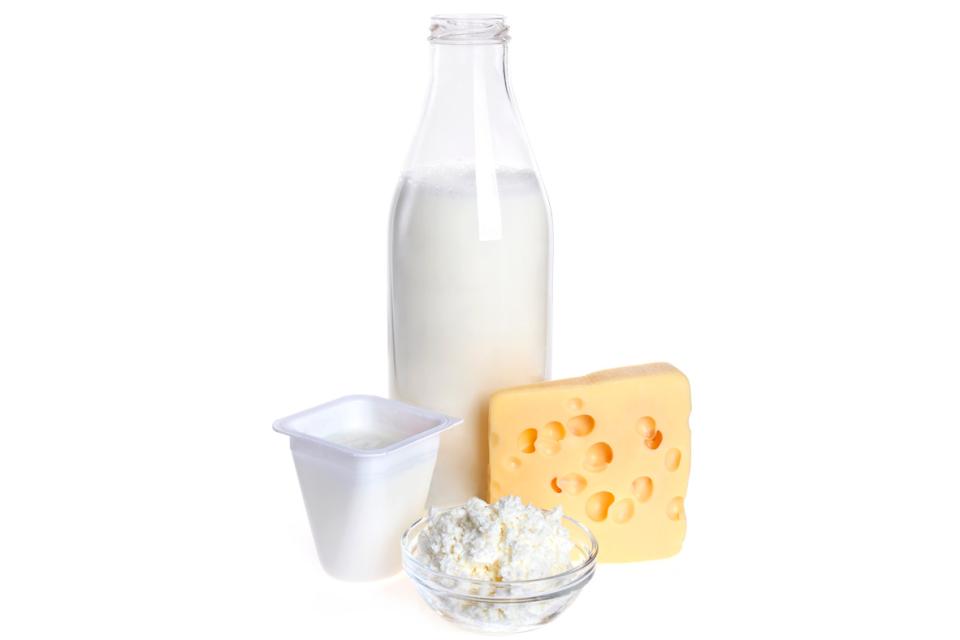
Milk products, such as milk, cheese and yogurt, are natural sources of calcium that our body can readily absorb. Including daily servings of dairy products as part of a healthy diet facilitates meeting calcium requirements.
- Milk products, including milk, cheese, yogurt and kefir, are a reliable source of calcium with good bioavailability.
- Most plant-based foods contain less calcium and/or contain compounds that limit calcium absorption.
- Calcium works along with many other nutrients in dairy foods to support strong bones.
- Regular dairy consumption contributes to daily calcium intake; 2-3 daily servings can provide a substantial portion of recommended levels.
Meeting Calcium Needs
The Institute of Medicine established recommended daily calcium intakes for Canadians aged 4 years and older, ranging from 1,000 to 1,300 mg.8,13 These recommended daily intakes, known as the Recommended Dietary Allowances (RDA), vary according to age, sex group and factors including pregnancy and lactation.8-13 The RDA for calcium are based on the levels needed for calcium balance and supporting bone health.8
Recommended Dietary Allowances (RDAs) for calcium
| Age (years) |
1-3 | 4-8 | 9-13 | 14-18 | 19-50 | 51-70 | 71+ |
| Females (mg) |
700 | 1000 | 1,300 | 1,300* | 1,000* | 1,200 | 1,200 |
| Males (mg) |
700 | 1000 | 1,300 | 1,300 | 1,000 | 1,000 | 1,200 |
*Including in pregnancy and breastfeeding.
In Canada, a typical serving of milk (250 mL) contains approximately 300 mg of calcium, representing about 25-30% of the daily recommended intake (RDA) for calcium depending on age and sex.13-14 In addition, yogurt and cheese are also sources of calcium. Therefore, approximately three daily servings of dairy account for a substantial portion of the recommended calcium intake.
Explore the association between adherence to Canada’s 2019 Food Guide and the risk of nutrient inadequacies in older adults
Click hereDietary Sources of Calcium: Dairy and Plant-Based Products
National osteoporosis organizations generally promote a food-first approach, emphasizing dietary sources of calcium before the use of supplements when possible.1,8 Milk products, including milk, cheese and yogurt, are the main sources of calcium in the diet.1-9
When considering dietary calcium sources, it is important to note that few foods naturally contain high concentrations of calcium. In addition, calcium is not absorbed to the same degree in all foods. Not only is milk naturally high in calcium, but the calcium is also highly bioavailable, enabling efficient absorption and utilization by the body.3,11,12 In contrast, while many plant foods contain calcium, they are typically found in lower amounts and/or in a less bioavailable form.3,11,12 The reduced absorption is primarily due to the presence of two types of compounds that bind to calcium and ultimately inhibit calcium absorption:3,6,8,11,12 :
-
Oxalates – Commonly found in spinach, collard greens, sweet potatoes and beans.8,12
-
Phytates – Commonly found in cereals, legumes and nuts.8,12
According to the Institute of Medicine, foods high in oxalates and/or phytates are considered poor sources of calcium, reflecting their inhibitory effect on absorption.8
-
For example, one would need to consume 15 servings (125 mL each) of spinach to absorb the same amount of calcium as from a single cup of 2% milk.12,14
While some dark green vegetables, such as broccoli and kale, have higher absorption rates, they often contain less calcium.12
-
For example, one would have to consume over 6 servings (125 mL each) of broccoli to absorb the same amount of calcium found in one cup of 2% milk. 12,14
To learn more about calcium bioavailability and how it varies across different dietary sources
Click hereThe Added Advantage of Dairy Foods
Milk products are recognized as a primary source of calcium and also provide high-quality protein. In Canada, some products such as milk and some yogurts and kefirs, are fortified with vitamin D. Together, these nutrients support bone health.1,10
Milk products also supply six key nutrients that contribute to bone health, which many Canadians do not get enough of:15,16
- Calcium
- Magnesium
- Potassium
- Zinc
- Vitamin A
- Vitamin D
Overall, when considering important factors such as calcium bioavailability and/or calcium content, dairy products provide an easy and reliable way to help meet daily calcium needs to promote bone health. Regular consumption of three daily servings of milk products contributes significantly to meeting daily calcium requirements and can therefore help support overall bone health.
References
- International Osteoporosis Foundation. Calcium. www.osteoporosis.foundation. Accessed January 15, 2026.
- Shkembi B and Huppertz T. Calcium absorption from food products: food matrix effects. Nutrients 2021;14:180.
- Chalupa-Krebzdak S et al. Nutrient density and nutritional value of milk and plant-based milk alternatives. Int Dairy J 2018;87:84-92.
- Muleya M et al. A comparison of the bioaccessible calcium supplies of various plant-based products relative to bovine milk. Food Res Int 2024;175:113795.
- Weaver CM and Heaney RP. Calcium in human health. Totowa, NJ: Humana Press; c2006. Chapter 9, Food sources, supplements and bioavailability; p.129-42.
- Weaver CM et al. Choices for achieving adequate dietary calcium with a vegetarian diet. Am J Clin Nutr 1999;70:543S-548S.
- Weaver CM et al. The National Osteoporosis Foundation’s position statement on peak bone mass development and lifestyle factors: a systematic review and implementation recommendations.Osteoporos Int 2016;27:1281-1386.
- Institute of Medicine. Dietary Reference Intakes for calcium and vitamin D. Washington, DC: National Academy Press, 2011.
- Health Canada. Evidence review for dietary guidance: Technical report 2015. Ottawa, Ontario: Health Canada. 2016.
- Osteoporosis Canada. Calcium food sources. www.osteoporosis.ca. Accessed January 16, 2026.
- Weaver CM and Plawecki KL. Dietary calcium: adequacy of a vegetarian diet. Am J Clin Nutr 1994;59:1238S-1241S.
- Weaver CM et al. An algorithm to assess calcium bioavailability from foods. J Nutr 2024;154:921-927.
- Health Canada. Dietary reference intakes table: reference values for elements. www.canada.ca. Accessed January 19, 2026.
- Health Canada. Canadian nutrient file. www.food-nutrition.canada.ca. Accessed January 26, 2026.
- Health Canada. Evidence review for dietary guidance: Summary of results and implications for Canada’s Food Guide. Ottawa, Ontario: Health Canada. 2016.
- Wallace TC et al. Dairy intake and bone health across the lifespan: a systematic review and expert narrative. Crit Rev Food Sci Nutr 2021;61:3661-3707.